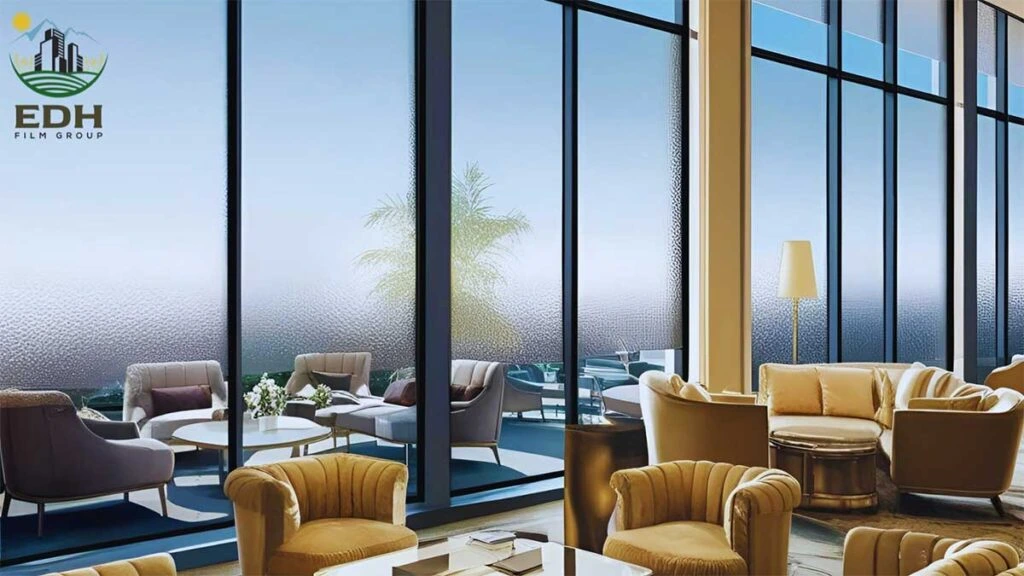
Energy costs remain a significant concern for commercial property owners, especially in buildings with large glass surfaces. Uncontrolled heat gain in the summer forces cooling systems to work harder, while heat loss in the winter increases heating expenses. Commercial window tinting provides a cost-effective and highly efficient solution to minimize energy consumption, lower operational costs and improve indoor comfort.
By applying commercial building window tinting, businesses can significantly cut cooling expenses, enhance insulation and create a more comfortable environment without costly window replacements. This guide will explain how window tinting reduces energy costs, explore the different types of films, highlight financial benefits and provide expert insights on installation and maintenance.
How Does Window Tinting Reduce Energy Costs?
Windows accounts for a significant percentage of a building’s energy loss. Without proper protection, sunlight and heat pass through freely, forcing HVAC systems to work harder to maintain indoor temperatures. Business window tinting acts as a thermal barrier that reduces heat gain in summer and retains warmth in winter, leading to lower energy use and improved efficiency.
The Science Behind Heat Rejection and Insulation
Advanced commercial window tint is designed with heat-rejecting and insulating properties to optimize energy efficiency. Window films function by:
- Blocking solar heat – Reflective films deflect heat, while non-reflective films absorb and evenly disperse it, preventing temperature imbalances.
- Filtering UV rays – High-quality films block harmful UV rays, protecting interiors from sun damage and preventing fading of furnishings.
- Providing insulation – Low-E (low emissivity) films act as an additional insulating layer, reducing heat loss in winter and maintaining indoor warmth.
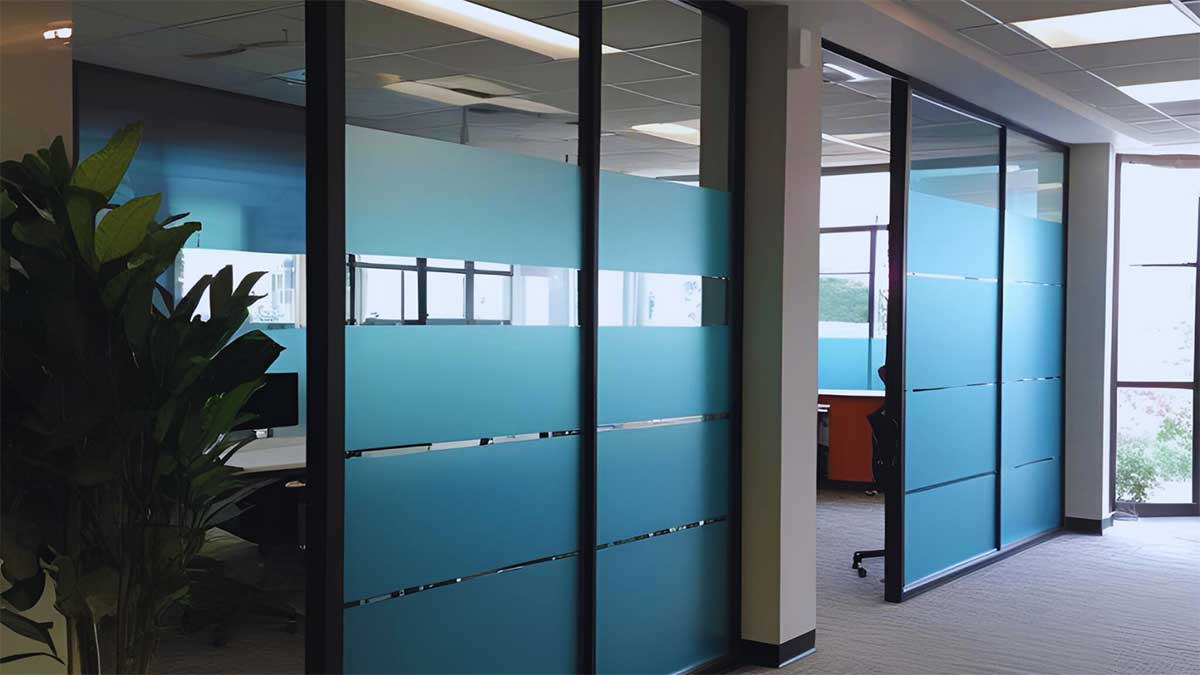
What Are the Different Types of Commercial Window Films for Energy Efficiency?
Not all commercial window tinting solutions provide the same level of heat rejection, insulation or glare reduction. Choosing the right window tinting film for commercial buildings depends on several factors, including the building’s orientation, local climate, architectural design and privacy requirements. A well-selected film enhances energy efficiency, improves indoor comfort and adds to the overall aesthetic appeal of a commercial space.
Reflective vs. Non-Reflective Films
Reflective and non-reflective films provide energy-saving benefits but achieve them in different ways. The choice between the two depends on factors like desired visibility, privacy concerns and the overall look a business wants to achieve.
Reflective Films: Maximum Heat Rejection and Privacy
Reflective films have a metallic or mirrored coating that bounces solar heat away from windows, significantly reducing indoor temperatures. These films are highly effective in warm climates, where excessive heat gain can drive up cooling costs.
- Benefits:
- Rejects up to 79% of solar heat, reducing the need for air conditioning.
- Provides daytime privacy, preventing outsiders from seeing inside while maintaining clear indoor views.
- It helps reduce glare, improving visibility for office workers, retail spaces and high-rise buildings.
- Best for:
- Large office buildings with extensive glass exposure.
- Retail stores are looking to keep interiors cooler while ensuring privacy.
- Businesses want an energy-efficient solution with a modern, sleek or mirrored look.
Non-Reflective Films: Subtle and Aesthetically Pleasing
Non-reflective films absorb and disperse heat instead of reflecting it outward. They provide many of the same energy-saving benefits as reflective films but without altering a building’s exterior appearance.
- Benefits:
- It allows businesses to maintain a natural glass look without a metallic or mirrored finish.
- Reduces hot spots by evenly distributing absorbed heat across the window surface.
- Best for:
- Commercial properties where aesthetics are a priority.
- Storefronts, restaurants and office buildings that want to maintain clear glass visibility.
- Businesses are looking for a subtle, high-performance window tinting solution.
While both film types offer significant energy savings, businesses should choose based on appearance preferences, heat rejection needs and privacy requirements.
Clear and Low-E Films for Energy Conservation
Clear and Low-E films offer the best of both worlds for businesses that want heat control without affecting window transparency. These films maintain the look of untreated glass while delivering measurable energy efficiency improvements.
Clear Films: Heat Control Without Darkening Windows
Clear films are designed for businesses that want maximum visibility while still benefiting from heat rejection and UV protection. Unlike traditional commercial window tinting, these films allow natural light to enter while filtering out unwanted solar heat.
- Benefits:
- Keeps interiors bright and open without darkening windows.
- Blocks UV rays to prevent furniture, flooring and merchandise from fading.
- Reduces glare, making it easier to view screens and displays.
- Best for:
- Storefronts, showrooms and businesses that rely on maximum visibility.
- Office spaces where employees need natural light but want to reduce glare.
- Restaurants and retail stores aim to enhance indoor comfort without changing the appearance of the glass.
Low-E Films: Insulation for Year-Round Energy Savings
Low-E (low emissivity) films provide a dual benefit—they keep interiors cooler in summer and warmer in winter. This makes them one of the most efficient commercial building window tinting types for businesses looking for year-round energy savings.
- Benefits:
- Reflects heat into the room during winter, reducing heat loss.
- Minimizes solar heat gain in the summer, keeping interiors cooler.
- Improves insulation performance, comparable to double-pane or triple-pane windows.
- Helps businesses minimize heating and cooling expenses significantly.
- Best for:
- Office buildings in climates with hot summers and cold winters.
- Hotels and restaurants aim to maintain consistent indoor temperatures.
- Businesses want an energy-efficient upgrade without replacing windows.
How Much Can Businesses Save on Energy Bills?
The impact of commercial window tints on energy efficiency is substantial. The U.S. Department of Energy (DOE) reports that untreated windows can account for up to 30% of a commercial building’s total energy use. Commercial building window tinting significantly reduces this energy loss by minimizing heat gain in the summer and improving insulation during colder months.
- Cooling cost reduction – Businesses can experience up to 30% savings on air conditioning costs due to reduced heat gain from the sun. This is particularly beneficial in regions with high temperatures where HVAC systems work harder to maintain a comfortable indoor environment.
- Energy savings per square foot – On average, tinted windows save 19 kWh per square foot of glass annually. This reduction in energy demand translates into lower electricity bills and a more efficient building operation.
- Total energy expense reduction – Companies that invest in business window tinting often see an overall 5-15% decrease in total energy costs, making window films one of the most cost-effective energy upgrades available.
Many commercial buildings, particularly those with large glass surfaces, struggle with temperature imbalances, excessive glare and high cooling expenses. Applying commercial window tinting immediately addresses these issues, reducing reliance on air conditioning while maintaining indoor comfort.
ROI Timeline and Long-Term Benefits
A key advantage of window tinting for business is its fast return on investment (ROI). Unlike costly renovations or energy-efficient window replacements, commercial window tinting is an affordable upgrade that delivers financial returns quickly.
- Rapid payback period – Most businesses recover their initial installation costs within two to three years. Given the immediate impact on cooling and heating expenses, window films provide a higher return on investment than other energy-saving upgrades.
- Utility company rebates—Many energy providers offer incentive programs and rebates to encourage businesses to adopt energy-efficient solutions. These can significantly lower installation costs, allowing businesses to see financial benefits even sooner.
3: Beyond Cost Savings: Sustainability and Environmental Impact
Aside from financial savings, commercial window tinting aligns with corporate sustainability goals by reducing energy waste and improving building efficiency.
- Lower carbon footprint – By reducing energy consumption, businesses can minimize their environmental impact and contribute to a greener future.
- LEED certification benefits – Many commercial properties aim to meet LEED (Leadership in Energy and Environmental Design) energy efficiency and sustainability standards. Window films help qualify for LEED credits, making them a smart investment for businesses looking to improve their environmental standing.
- Improved tenant and employee comfort – Maintaining a consistent indoor temperature enhances workplace productivity and customer satisfaction. Employees experience fewer distractions from glare and hot spots and tenants benefit from more stable, comfortable environments year-round.
For businesses looking for a high-impact, low-cost energy upgrade, commercial window tinting offers an ideal solution. Window films provide a comprehensive return on investment that goes beyond energy savings by lowering operational expenses, improving HVAC performance and contributing to sustainability efforts.
How Do You Choose the Right Window Film for Your Business Needs?
Choosing the right commercial window tinting solution requires careful consideration of several factors. Every commercial property has unique needs, whether it’s reducing cooling costs, enhancing privacy or improving aesthetics. The proper film can optimize energy efficiency, maintain indoor comfort and complement the building’s design.
When selecting commercial building window tinting, business owners must evaluate building orientation, climate conditions, privacy preferences and regulatory compliance. Understanding these factors ensures that the chosen window film aligns with both functional and legal requirements.
Key Factors to Consider
Sun Exposure: Managing Heat and Glare
The level of sun exposure plays a crucial role in determining the best window film for a business. Buildings with large glass facades or south-facing windows are more susceptible to solar heat gain, which can significantly increase cooling costs.
- High-performance solar rejection films are ideal for buildings that experience intense direct sunlight. Reflective and Low-E films block excess heat, reducing strain on HVAC systems.
- Glare control films help minimize discomfort caused by direct sunlight, making workspaces more comfortable for employees and customers. These films improve screen visibility in offices while maintaining a bright and open atmosphere.
For businesses in hot climates, choosing a film with strong heat rejection capabilities is essential to keep cooling costs under control.
Aesthetic Preferences: Enhancing the Look of Your Commercial Space
A window film’s appearance can impact a business’s overall aesthetic and branding. While some companies prefer clear or neutral films to maintain visibility, others opt for decorative or reflective films to achieve a modern and professional look.
- Clear Films – Maintain the building’s original appearance while providing UV protection and minor heat reduction.
- Reflective Films – Create a sleek, mirrored appearance, which enhances privacy while significantly reducing heat gain.
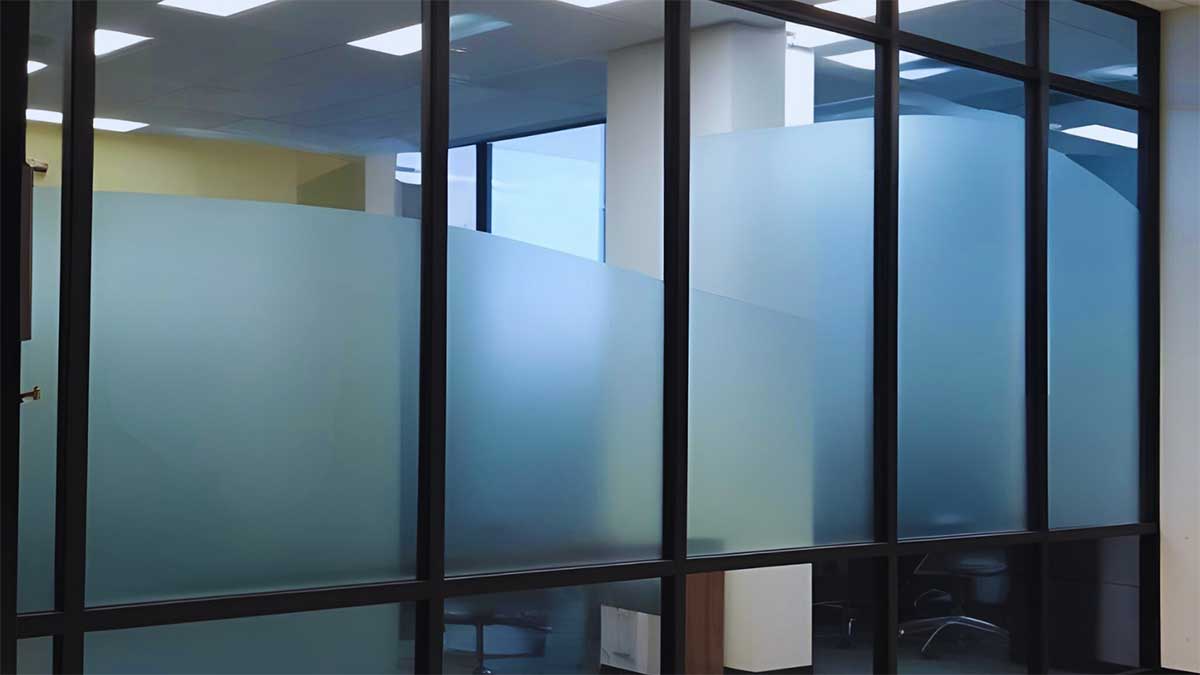
- Decorative and Frosted Films—These films add a layer of design and branding while also improving privacy. They are commonly used in offices, conference rooms and storefronts.
Selecting a film that complements the building’s exterior and interior design ensures that energy efficiency improvements do not compromise aesthetic appeal.
Privacy Needs: Balancing Visibility and Security
Privacy is another essential factor for businesses, especially for ground-level offices, medical facilities and financial institutions that handle sensitive information.
- Reflective Films—These provide one-way daytime privacy, preventing outsiders from seeing into the building while maintaining clear outward views. They are useful for office buildings and retail stores.
- Frosted or Etched Films – Offer 24-hour privacy by obscuring visibility from both directions. These films are perfect for conference rooms, private offices and healthcare facilities that require discretion without blocking natural light.
Companies can create a more secure, professional and comfortable environment for employees and clients by selecting the appropriate business window tinting.
Why EDH Film Group is Your Trusted Partner
With over 75 years of combined experience, EDH Film Group is a 3M™ Authorized Dealer. We offer high-performance window films tailored to meet the unique needs of commercial buildings. We specialize in energy-saving, security, decorative and Low-E window films, helping businesses optimize efficiency without compromising aesthetics.
Our commitment to excellence and precision ensures that every project is completed with the highest standards of quality and craftsmanship. As a trusted commercial building window tinting provider, we serve businesses across Chicago, Dallas-Fort Worth and Oklahoma City, delivering superior window solutions that enhance property value and sustainability.
Find the Right Window Tinting Solution for Your Business
The right commercial window tinting solution can reduce energy costs and enhance indoor comfort. At EDH Film Group, we work closely with business owners, facility managers and contractors to provide expert guidance and high-performance window films that meet the highest industry standards.
As a 3M™ Authorized Dealer, we take pride in offering top-tier window film solutions across Chicago, Dallas-Fort Worth and Oklahoma City. Contact EDH Film Group today to schedule a consultation and discover how our business window tinting services can help you cut energy costs, improve comfort and protect your commercial space.